Trucks and SUVs lead
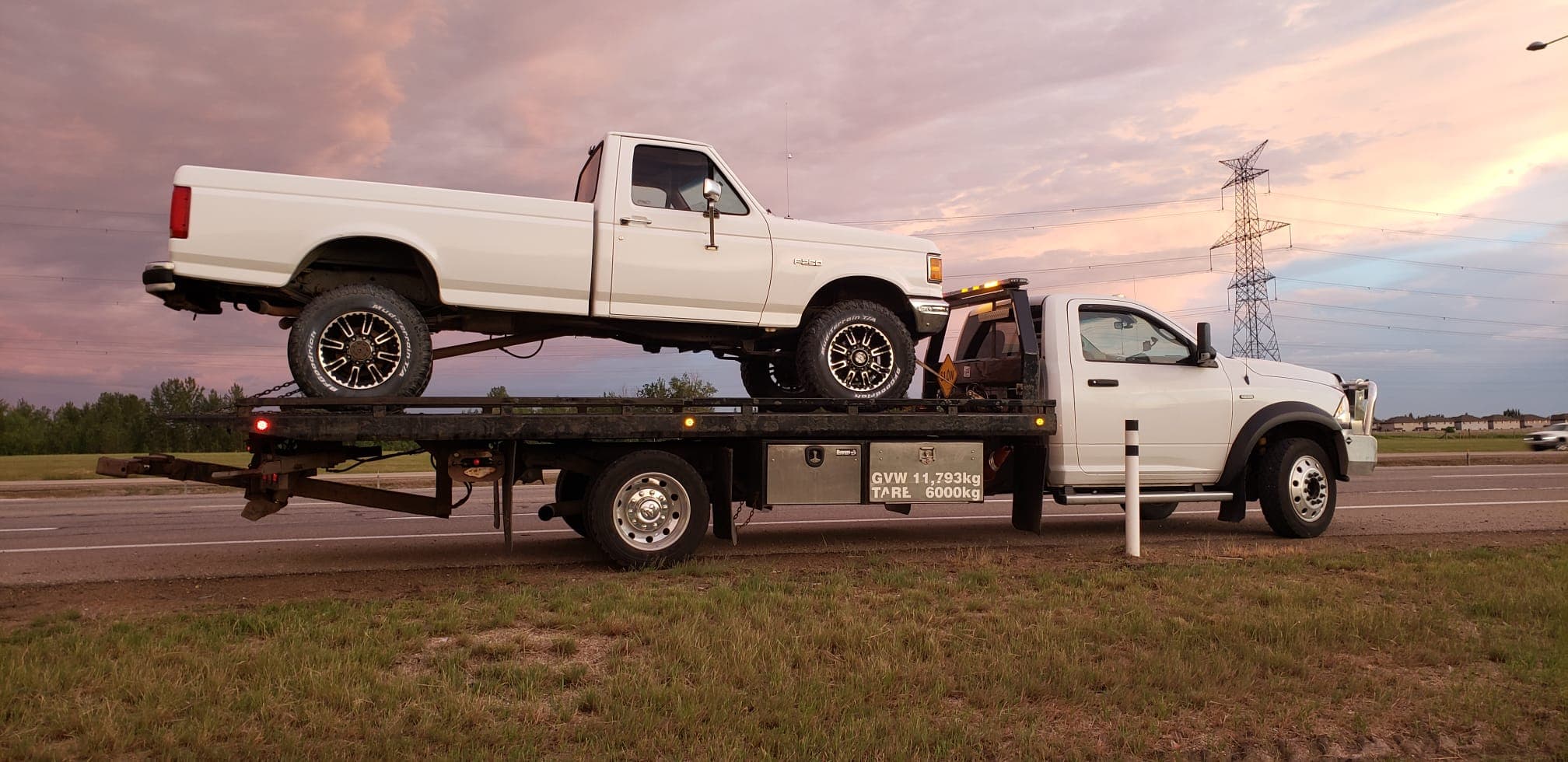
This is a truck market. Used transfer cases, rear differentials, transmissions, and body-side parts move steadily, which strengthens offers on half-tons, three-quarter-tons, one-tons, and full-size SUVs.
How Value Works
There are two ways to value any vehicle, and knowing which one applies explains every offer you will receive. As transportation, the vehicle goes back on the road and is priced against what Edmonton buyers pay for that model. As recoverable value, the vehicle never drives again and is priced on the parts that can be resold plus the material underneath.
Most sellers assume they are in the first category and are quoted for the second. But the second category is not a consolation prize. A late-model truck with a destroyed front end can still have a healthy drivetrain, current-generation electronics, good glass, an intact rear half, and undamaged wheels.
That is why a badly damaged but complete truck can be worth several times what a rusted-out car of the same size is worth. The reason it cannot go back on the road has nothing to do with the value of what is still bolted to it.
What This Solves
This is a truck market. Used transfer cases, rear differentials, transmissions, and body-side parts move steadily, which strengthens offers on half-tons, three-quarter-tons, one-tons, and full-size SUVs.
Transfer cases, front differentials, hubs, and driveshafts matter more here than they do in milder climates because local demand for those components is real and steady.
A high-mileage F-150, Silverado, Ram, Civic, Corolla, Escape, or Grand Caravan often carries stronger practical parts demand than an unusual European import regardless of original sticker price.
Process
Runs and drives, registrable: worth the most, and often worth more sold privately than to us.
Runs but not road legal: failed inspection, no registration, or uninsurable as-is. Strong offers because the drivetrain is proven.
Doesn't start, otherwise complete: the bulk of what we buy, priced on recoverable parts plus weight.
Doesn't roll or is heavily stripped: still buyable, but it changes the truck we send and usually puts the vehicle in the lowest pricing tier.
The single biggest factor in whether the quote holds is whether the vehicle you describe is the vehicle we meet.
Current or expired registration in your name and photo ID are the basics. For a bought-back write-off, we also need the documents showing you own the salvage.
Tell us what is wrong with it, what is missing, and whether it starts, rolls, and steers. An honest rough vehicle gets paid as quoted. A sugar-coated one gets corrected at the gate.
If it is inherited, tied to an outstanding loan, missing paperwork, or was left behind by a previous tenant, call and explain it first. Many of these are workable in Alberta, but none of them are workable as a surprise.
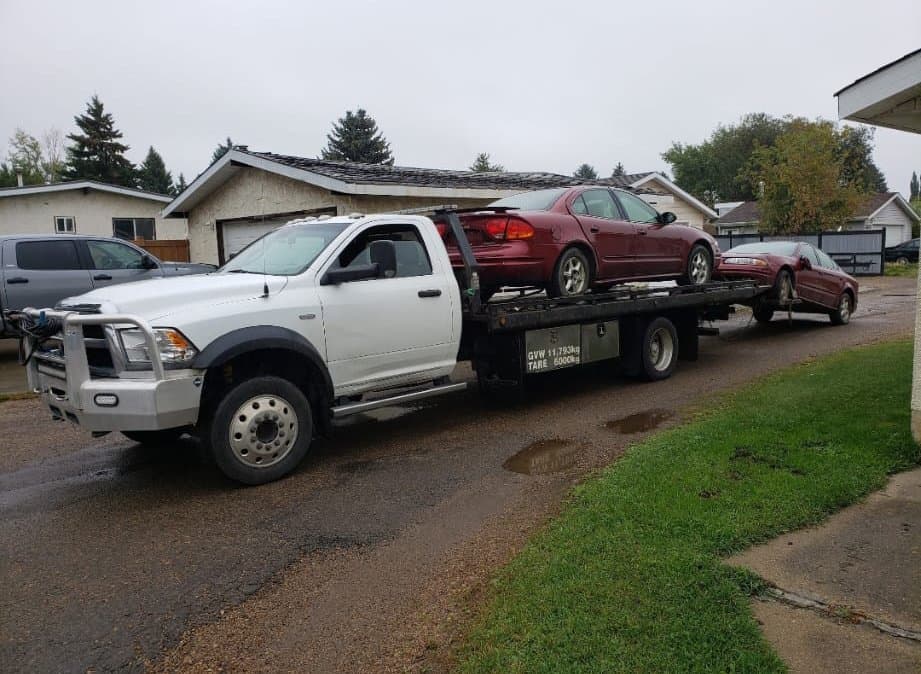
You get a firm quote on the phone or by text. Morning calls across Edmonton and the immediate metro usually clear the same day. We complete the bill of sale at the vehicle, pay cash or Interac e-Transfer before it loads, and towing is included and never deducted.
You keep your plates. Afterward, cancel the registration at any Alberta registry agent and ask your insurer about a refund on unused premium. If you want the real number, send the year, make, model, honest condition, and where it is parked.
Common Questions
Yes — most of what we buy does not. It changes the equipment we send, not whether we come.
Yes, provided you own the vehicle. If your insurer paid you out and kept the salvage, it is theirs to dispose of.
Yes. Failed inspections and non-registerable imports are routine, and late-model ones often carry strong parts value.
Rarely, on an end-of-life vehicle. Repair costs on these seldom return more than they cost — and we'd rather say so than buy something you would have been better off keeping.
Cash or Interac e-Transfer, in full, before the vehicle is loaded.
Sometimes, depending on circumstances. Call and describe the situation.